
This post contains affiliate links. If you buy through them, Roads Less Mapped may earn a small commission at no extra cost to you.
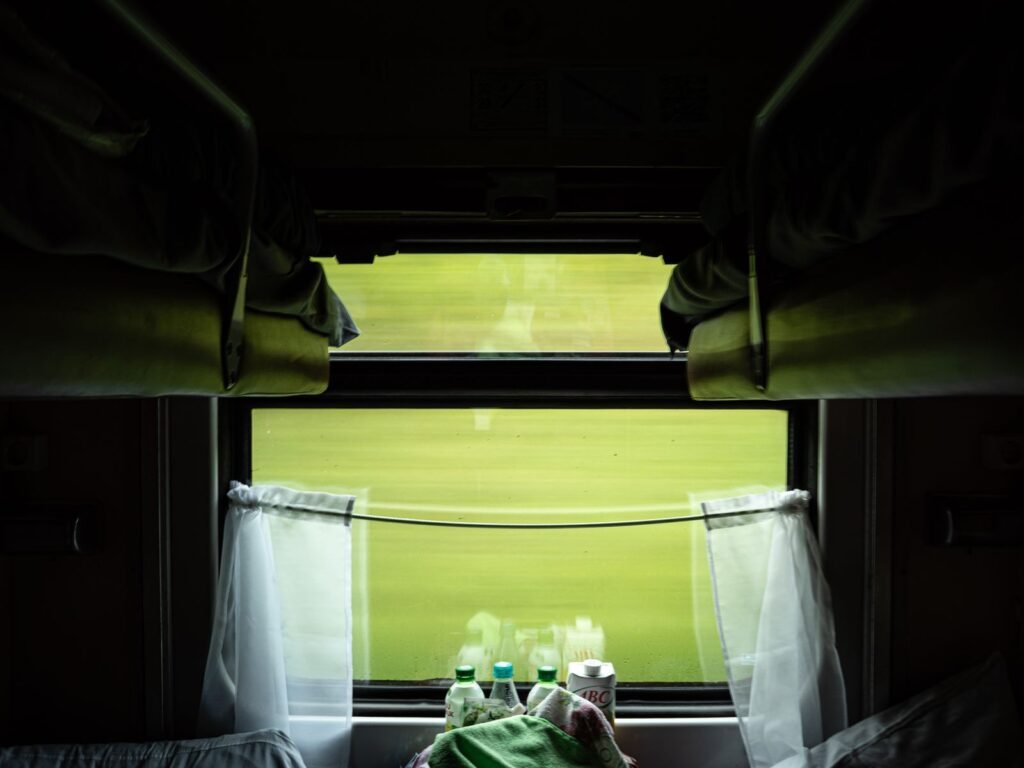
The places I write about on this site have one thing in common, apart from not having a website: getting to them takes a long time. Not dramatic time. Not expedition time. Just hour after hour in a seat. A bus that leaves before dawn and stops at every village with a shop. A night train that is slower than the day train but saves a hotel. A shared minibus that waits until it is full, and then waits a bit longer.
I have made my peace with the hours. What I took much longer to make peace with was what those hours do to the rest of me. This is a short post about the body on a slow route, and one small thing I wish someone had told me about sooner.
The fourteenth hour
There is a point on every very long bus ride where the novelty runs out. For me it is somewhere around hour ten. The view has turned into more of the same view, my book is finished or unreadable because of the road, and I start to notice my own body in a way I never do on a normal day. My knees, folded against the seat in front. My feet, which have been in the same shoes, on the same patch of floor, since before sunrise.
The first time I arrived somewhere after fourteen hours on a bus, I stepped down onto the gravel and my ankles felt like they belonged to somebody else. It wore off after an hour of walking around a village nobody had told me about. But I remember thinking that I had planned every part of that journey except the part where I sat still for most of a day.
What I do now on the long legs of a trip
Most of this is not clever. It is what years of slow routes have taught me, usually by getting it wrong first.
Get off at every stop that allows it
Buses in out-of-the-way places stop a lot. Fuel, food, a driver who knows someone in the next town. I used to stay in my seat to keep it. Now I get off every time I am sure the bus will wait, even if it is only to walk to the end of the lot and back. Ask the driver how long. Point at your watch. Learn the word for “minutes” in the local language before you go.
Choose the aisle when it matters
The window seat is better for the view, and on the first few hours I always want it. On a journey of twelve hours or more, I have started choosing the aisle, so I can stretch a leg out and stand up without climbing over a sleeping stranger.
Water, even though it means stopping
On a bus without a toilet there is a strong temptation to drink nothing all day. I have done it. I arrived feeling worse than the journey deserved. These days I drink, and I plan around the stops instead.
Loose clothes, considered socks
I travel in clothes that do not dig in anywhere when I sit for hours. And I started paying attention to my socks, which is where this post was always going.
Compression socks, and who they are for
I first heard about compression socks for travel from a woman who sat next to me on an overnight bus. She had been a nurse for years and wore them on every long journey, and she said it in the same tone you would use to recommend bringing a scarf. I had always assumed they were medical equipment, something prescribed rather than chosen.
They do not have to look like it. VIM & VIGR makes compression socks in patterns and colours that look like ordinary good socks, and if you are curious what is out there, the banner below goes straight to their range.
Here is the part I want to be careful about. I write about villages without websites, not about medicine. I am not going to tell you what compression socks do or do not do for your circulation, and nothing on this blog is medical advice. If you have a health condition, are pregnant, take medication that affects your blood, or simply are not sure whether they suit you, ask a doctor or pharmacist before a long journey. Compression is not right for everybody, and a travel blog is the wrong place to find out.
The rest of the journey still counts
What changed for me was not really about socks. It was about seeing the journey as part of the place. On the routes I take, the getting there is often a third of the trip, sometimes more. For years I treated it as time to be endured. Now I treat it the way I treat everything else on a slow route: something to plan for a little, and then accept.
The fourteen-hour bus is still fourteen hours. But I get off at the stops, I sit where I can stretch, I drink the water, and I arrive at the end of the road feeling like someone who can walk around a village for the evening rather than someone who needs to lie down.
Arriving in one piece
The best moment of any slow route, for me, is stepping down at the end. The bus pulls away, the dust settles, and there is a place in front of me that I knew about only from someone’s description over tea. I want to be in a state to walk into it.
If you are planning a journey with a lot of sitting in it, you can take a look at VIM & VIGR compression socks and decide, with your doctor if you need to, whether they belong in your bag. And get off at the next stop. The bus will wait.
Photos: Pew Nguyen and Viktory Sim via Pexels.